Core ID, OD, and Wall Thickness Explained
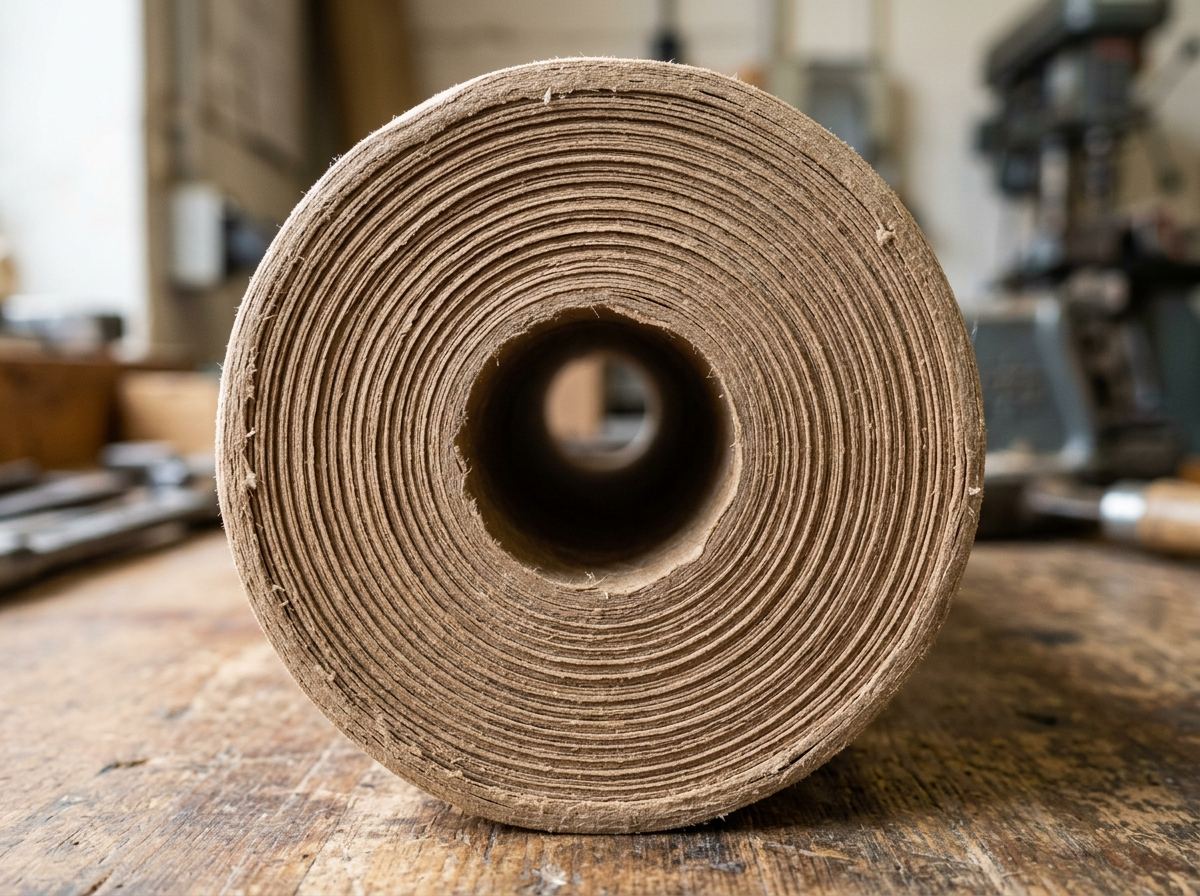
Your converter just called. A core ID spec that worked fine for years is now holding up a line because the mandrel changed. Or you inherited a purchase order from a colleague and it only lists an OD — and your supplier needs the ID and wall. These situations happen constantly, and they trace back to the same root cause: the three dimensions of a paper core are interdependent, and misunderstanding any one of them creates downstream problems. Paper core wall thickness, inside diameter, and outside diameter are not independent specs you can pick in isolation. This article explains how they relate, how to think about each dimension, and what to hand your supplier when you’re ready to order.
Inside Diameter: The Dimension That Fits the Machine
The inside diameter (ID) is the bore of the core — the open center that slides onto your mandrel, chuck, or spindle. It is the starting point for every core spec because it is the dimension controlled by your equipment, not by your choice of material or wall.
If the ID is too small, the core won’t mount. If it’s too large, you get slop, vibration, and potential web breaks. The ID has to fit the machine first; everything else is built around it.
NH Paper Tube manufactures cores from 1″ to 8″ inside diameter, with custom diameters available outside that range. When you call or send a quote request, lead with the ID. It is the one number that is non-negotiable on your end.
Outside Diameter: What the Finished Roll Sees
The outside diameter (OD) is the total outer dimension of the bare core. It matters in two places: equipment clearances (some winders and slitters have guards, lay-on rolls, or traversing arms that need to clear the core before winding begins) and finished-roll geometry (the core OD sets your inner wind diameter, which affects how much material you get on a given roll).
Here is the relationship every buyer should commit to memory:
OD = ID + (2 × Wall Thickness)
That formula is the whole story. OD is a derived value, not an independent one. If you know any two of the three dimensions — ID, OD, or wall — you can calculate the third. When a customer gives us an OD and an ID, we calculate the wall. When they give us an ID and a wall, we calculate the OD. When they give us an OD and a wall, we calculate the ID. The math is simple; the discipline of tracking all three is what matters.
See our core ID, OD, and wall thickness chart for a reference table covering common dimension combinations.
Wall Thickness: The Structural Variable
Wall thickness is the dimension you adjust to meet the load the core has to carry. NH Paper Tube’s capability runs from .030″ to .500″ wall — a wide range that covers everything from lightweight label and tape converting to heavy mill-roll and industrial winding applications.
Thin walls are not a compromise. A light-tension converting operation winding pressure-sensitive label stock onto a 3″ core doesn’t need the same wall as a paper mill winding a mill roll that will be forklift-handled and stored under its own weight. Specifying more wall than an application needs adds cost and changes the OD, which may create clearance or roll-geometry issues downstream.
A few practical guidelines, without putting numbers on loads your supplier hasn’t verified for your specific setup:
- Tape and label converters typically run thinner walls; the winding tension is modest and the cores are handled relatively gently after slitting.
- Coated fabrics, film, and flexible packaging often need moderate wall to handle wider, heavier rolls.
- Paper mill, tissue, and heavy industrial applications generally call for thicker walls because cores must survive forklift handling, stacking, and high-tension winding.
When in doubt, describe the application — the material being wound, the winding tension if known, how the finished rolls will be handled and stored — and let your supplier work backward to a wall recommendation. That is exactly the kind of conversation our team at NH Paper Tube is set up to have.
Length: The Third Axis
Core length runs from .25″ to 300″ in our production range. Length is usually determined by slit width (for converting applications) or by the machine width and winding geometry of the end use. It is typically the most straightforward of the three specs, but it interacts with core handling: a very short core (think a .25″ spacer or a narrow tape core) has different structural considerations than a 120″ mill-width core, even at the same ID and wall.
For our slitting and rewinding customers, length precision matters because slit cores need to pack tightly across the arbor without gaps that cause web wander.
What to Give Your Supplier When You Order
When you reach out for a quote or a sample, have these four things ready:
- ID — the mandrel or chuck size your equipment requires
- Wall thickness or OD — either works; we calculate the third
- Length — in inches, to the precision your operation requires
- Application context — what you’re winding, how it’s handled, any load or clearance constraints
That’s it. With those four inputs, we can recommend a construction, provide a sample for fit verification, and quote production quantities. If you’re running a new core spec on critical equipment, always ask for a sample before committing to a full run. Fit issues that would take seconds to catch on a sample core can cost hours on a production line.
Custom Paper Tube and Core Manufacturing From NH Paper Tube
NH Paper Tube LLC is a spiral-wound paper tube and core manufacturer based in Raymond, New Hampshire, with a team carrying more than 50 years of combined industry experience. We build custom cores from 100% recycled OCC paper — with 100% of production waste recycled — and offer in-house design and printing. $1,000 minimum order. Stock cores ship same day with 24-hour delivery across New England; custom orders are ready in about 5–7 business days, with emergency expedite available for a small fee. We serve manufacturers across New Hampshire, Massachusetts, Connecticut, Maine, Vermont, and Rhode Island — typically within a one-to-two-day freight lane. Request a quote or call 603-693-6136.
Related reading: “Paper Core Crush Strength: How to Spec It (and Why Cores Fail)” (slot 01) · “Inside-Diameter Tolerance: The Spec That Bites First” (slot 29).