Paper Core MOQs, Setup, and Stocking Programs Explained
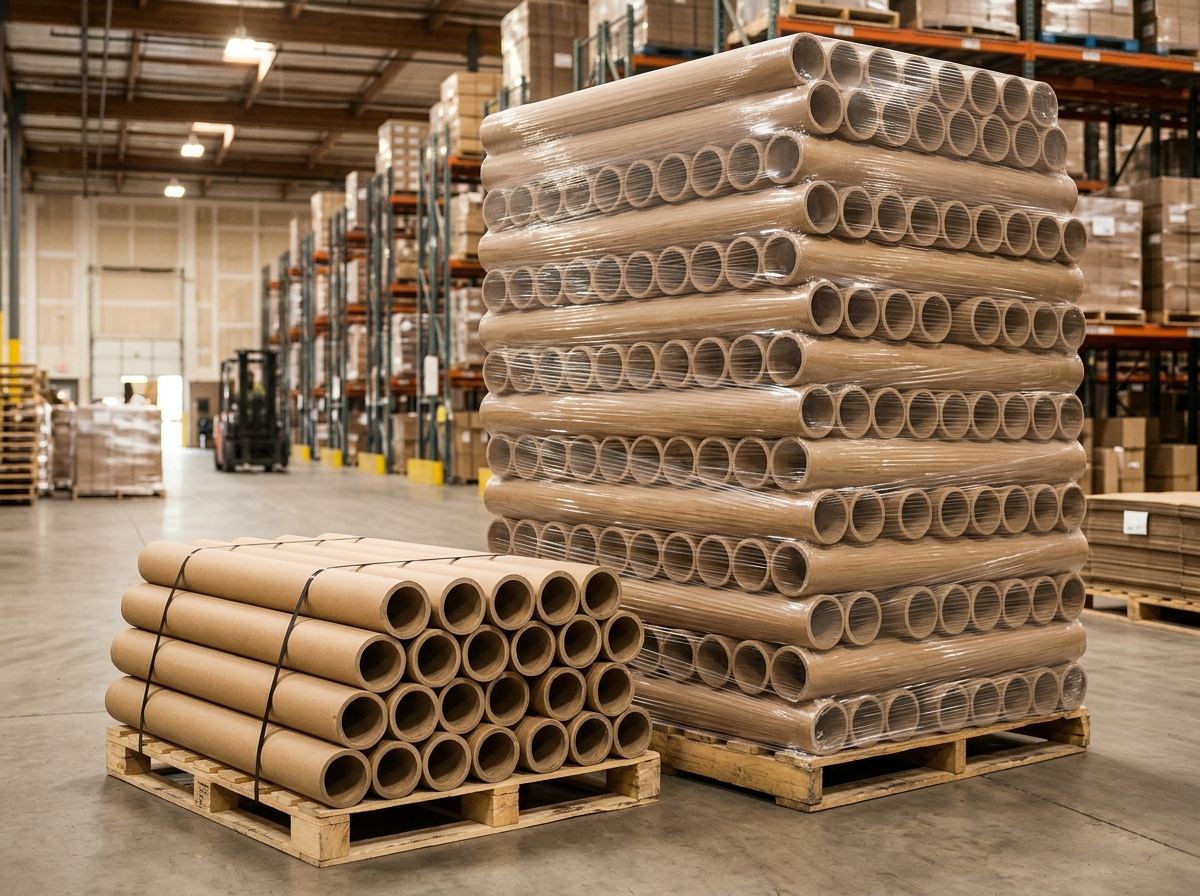
If you’ve ever called a paper core supplier and gotten a quote that came with a minimum order quantity you didn’t expect, you’re not alone. Understanding paper core minimum order quantity requirements — and the setup and stocking options that go with them — is one of the first things procurement and operations buyers need to nail down before placing an order. Get it wrong and you’re either sitting on inventory you don’t need or paying premium pricing because your volume didn’t qualify for a better break.
This article walks through how MOQs typically work for paper cores, what drives them, and how stocking programs can change the math in your favor.
Why Paper Core Minimum Order Quantities Exist
Paper cores are made on converting equipment calibrated to specific dimensions — inside diameter, wall thickness, and length. For stock sizes, manufacturers keep standard setups ready to run. For custom dimensions, there’s tooling and setup time involved before a single core comes off the line.
That setup investment is why MOQs exist. Whether it’s a machine changeover, a custom print run for your logo, or a specialty wall thickness, the supplier needs enough volume on the order to justify the time and material cost. The MOQ isn’t arbitrary — it’s the floor at which the job makes economic sense to run.
For buyers, the practical question is: does your volume clear that floor, and if not, what are your options?
At NH Paper Tube, the minimum order is $1,000 — this applies across the board, whether you’re ordering stock or custom cores. That dollar-based minimum means the piece count threshold varies by unit price, which in turn depends on your spec: a simple stock core at a lower price point will require more pieces to clear the minimum than a complex custom core.
Stock Cores vs. Custom Cores: MOQ Implications
The easiest path around high MOQs is ordering from a stock tube and core program. Stock programs are pre-configured sizes that a manufacturer runs in high volume and holds in inventory. Because there’s no custom setup required, minimum quantities can be significantly lower and lead times are shorter — in some cases, same-week shipping.
NH Paper Tube runs a quick-ship stock program out of Raymond, New Hampshire, with 1–2 day freight lanes covering all of New England: NH, MA, CT, ME, VT, and RI. If your core requirement falls within a standard size, that’s often the fastest and most cost-effective path.
Custom paper tubes and cores are a different calculation. NHPT manufactures spiral-wound cores in inside diameters from 1″ to 8″, wall thicknesses from .030″ to .500″, and lengths from .25″ to 300″. When you’re specifying a non-standard dimension — or adding in-house logo and artwork printing — expect a higher MOQ than a stock item, because the setup run is unique to your job.
That said, custom doesn’t have to mean slow. NHPT’s custom lead time runs about 5–7 business days, with emergency expedite available for a small fee when timing is critical.
How Core Stocking Programs Change the Equation
If you’re a consistent buyer — running the same core spec month after month — a stocking program is worth understanding. Here’s how they typically work:
- You commit to an annual volume (or a blanket purchase order), giving the supplier a forecast to plan production around.
- The supplier manufactures in larger, more efficient runs and warehouses inventory on your behalf.
- You release against that inventory as needed, pulling smaller quantities on shorter notice without triggering MOQ minimums on each individual release.
The net effect: you get the per-unit economics of a high-volume buyer even on smaller individual releases, and you don’t tie up your own floor space with months of inventory.
NHPT’s stock program is designed for large-volume customers. Stock cores ship same day and are delivered anywhere in New England within 24 hours. If your operation runs a consistent, high-volume spec, it’s worth asking about a stocking arrangement when you request a quote — program terms are worked out directly with the NHPT team based on your volume and needs.
A few questions to ask any supplier before entering a stocking agreement:
- What’s the minimum annual volume required to qualify?
- Who holds the inventory — you or the supplier?
- What are the release lead times once inventory is in stock?
- What happens to committed inventory if your spec changes?
Custom Core Setup: What Drives the Cost
For buyers evaluating a custom paper core order for the first time, setup is often the line item that catches them off guard. Setup covers the machine configuration, test runs, and any print plate or artwork preparation needed before production begins.
A few factors that influence setup complexity — and, by extension, MOQ:
- Wall thickness and diameter. Tighter specifications or less common dimension combinations may require more involved changeovers.
- Print and branding. In-house logo and artwork printing adds a print setup step on top of the core manufacturing setup.
- Length. Very short cores (under 1″) or very long ones (approaching 300″) can have different handling requirements.
- Material. NHPT manufactures from 100% recycled paperboard — all production waste is recycled — so the material supply chain is consistent, but specialty board weights can still affect run planning.
Understanding these variables helps you have a more productive conversation with your supplier when you’re asking about custom core ordering minimums.
Getting Started: Samples, Quotes, and What to Bring
Before committing to a custom core order, request samples. NHPT offers free samples so you can verify fit and function before production begins — particularly valuable when you’re qualifying a new core spec for a production line.
When you’re ready to quote, come prepared with:
- Inside diameter and wall thickness (or outside diameter, if that’s what you know)
- Length
- Estimated monthly or annual volume
- Whether you need printing
- Your target lead time
The more complete your spec, the faster and more accurate your quote will be.
Why Source Cores Regionally
NH Paper Tube is a New Hampshire-based manufacturer — not a distributor — with 50+ years of combined team experience making spiral-wound paper tubes and cores. Regional sourcing means 1–2 day freight lanes into all six New England states, no sales tax on New Hampshire purchases, and a direct line to the people making your cores. When a spec needs to change or an urgent order comes in, you’re talking to a manufacturer, not a middleman.
NH Paper Tube produces millions of cores per month and handles orders ranging from stock quick-ships to fully custom print-decorated cores. The $1,000 minimum applies to all orders. Stock cores ship same day with 24-hour delivery across New England; custom orders complete in about 5–7 business days, with emergency expedite available for a small fee. Whether your volume clears a standard MOQ or you need a stocking arrangement to make the economics work, the right conversation starts with a clear spec and a direct discussion about what options are available.
Request a quote or call 603-693-6136.
*Related reading: “How to Choos