Paper Cores for Yarn, Cordage, and Rope
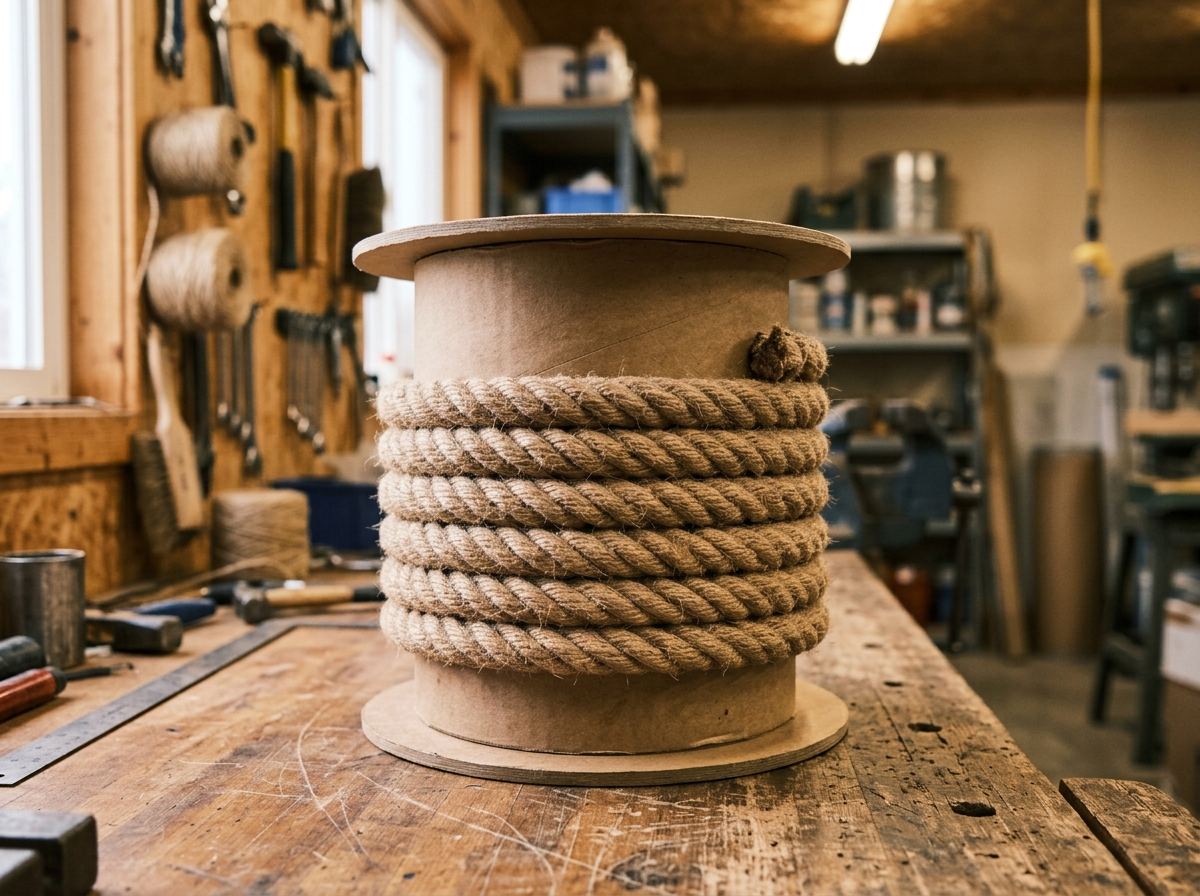
Every yarn mill, cordage maker, and rope manufacturer running a winding operation knows the frustration of a core that fails mid-shift: the spindle slips, the package goes out of round, or a burr on the bore snags a strand and causes a break. Getting yarn cordage cores right is not glamorous, but it is the kind of detail that separates a smooth production day from a costly stoppage. Here is what to look for when specifying paper tubes and cores for these applications — and why the source matters as much as the spec.
What Yarn Mills and Cordage Makers Actually Need From a Core
The core is not an afterthought. In a winding operation, it is the structural foundation of the entire package. Four requirements drive every specification decision:
Inside diameter accuracy. The core has to fit your mandrel or spindle without slop. Too loose, and it spins or walks during winding. Too tight, and it binds, slowing changeovers. Spiral-wound paper cores hold a consistent bore from batch to batch — that repeatability is what keeps a high-speed winding line running without constant adjustment.
Wall strength matched to the package. A lightweight yarn package on a small-diameter core has very different load requirements than a heavy rope package that may weigh dozens of pounds by the time winding is complete. Wall thickness across the range of .030″ to .500″ gives manufacturers real flexibility: specify a thinner wall where weight savings matter for shipping, or step up to a heavier wall where the package needs to survive stacking, handling, or transport without core crush.
Consistent length. If cores vary in length, finished packages vary in length. For retail or branded products especially, uniformity across a production run is not optional.
A smooth, square finish. Fine yarns in particular are sensitive to anything rough on the inner bore or at the tube ends. Burrs, ridges, or ragged cuts can snag individual strands and cause breaks or surface defects on the finished package. Square-cut ends mean the package sits flush on a pallet or shelf without rocking.
Choosing the Right Inside Diameter for Your Application
Inside diameters for yarn cordage cores vary considerably by product and equipment. Lightweight yarn operations often run smaller IDs — commonly in the 1″ to 3″ range — sized to match yarn-carrier spindles. Cordage and rope winders tend to run larger packages and correspondingly larger mandrels, with IDs that can extend well into the upper end of the 1″ to 8″ range.
The practical answer is: start with your mandrel diameter, add the fit tolerance your equipment requires, and specify from there. If your operation runs non-standard spindle sizes — common in specialty yarn or custom rope production — that is exactly the situation where custom-engineered cores are worth the conversation. Off-the-shelf sizes exist because most winders share common mandrel dimensions; custom cores exist because not everyone does.
See NH Paper Tube’s core ID, OD, and wall thickness chart for reference dimensions, or request a free sample to verify fit on your equipment before committing to a production run.
Recyclability: A Selling Point That Travels With the Package
In many yarn and cordage applications, the core ships with the finished product to the next customer in the supply chain — a distributor, a weaver, or a retail packager. That means the core’s end-of-life story matters beyond your own facility.
Paper cores made from 100% recycled paperboard are recyclable in standard paper recycling streams. For customers buying yarn or rope that is already positioned as a sustainable product, a recyclable core reinforces that story at every point of the supply chain. It is a detail that can show up in product literature, on a label, or in a purchasing conversation with an end customer who cares about material circularity.
NH Paper Tube manufactures with 100% recycled paperboard and recycles 100% of its own production waste. Learn more about the sustainable materials behind every core.
Why Local Supply Matters for High-Volume Winding Operations
Yarn mills and cordage manufacturers running continuous or high-volume production do not have the luxury of waiting on long freight lanes. A core shortage that shuts down a winding line for half a day is a real cost — in labor, in missed throughput, and in schedule disruption downstream.
NH Paper Tube ships into New England — New Hampshire, Massachusetts, Connecticut, Maine, Vermont, and Rhode Island — on 1 to 2 day freight lanes. Stock cores ship same day and arrive within 24 hours anywhere in New England, and custom orders are typically ready in about 5–7 business days — with emergency expedite available for a small fee when a production gap can’t wait. For yarn and cordage manufacturers across the region, that proximity is not just a convenience — it is a supply chain risk management tool.
New Hampshire also carries no state sales tax, which means no tax on purchases shipped to NH locations.
Specify Your Cores From a Manufacturer Who Knows the Application
NH Paper Tube is a spiral-wound paper tube and core manufacturer in Raymond, New Hampshire. Every core is made to order from 100% recycled OCC paperboard, with inside diameters from 1″ to 8″, wall thickness from .030″ to .500″, and lengths from .25″ to 300″. The team brings 50+ years of combined industry experience to custom-engineered specs — including non-standard IDs for specialty mandrels, custom lengths for uniform package formats, and in-house printing if your core carries a brand or label. $1,000 minimum order. Custom orders are ready in about 5–7 business days; stock cores ship same day with 24-hour delivery across New England, and emergency expedite is available for a small fee.
If you are sourcing paper tubes for textile and fiber applications in New England, NH Paper Tube offers free samples so you can verify fit and finish before production. Request a quote or call 603-693-6136.
*Related reading: “Textile Paper Tubes for Yarn, Fabric, and Nonwovens” · “Paper Core Crush Strength: How to Spec It (and Why Cores