Do Recycled Paper Cores Perform as Well as Virgin?
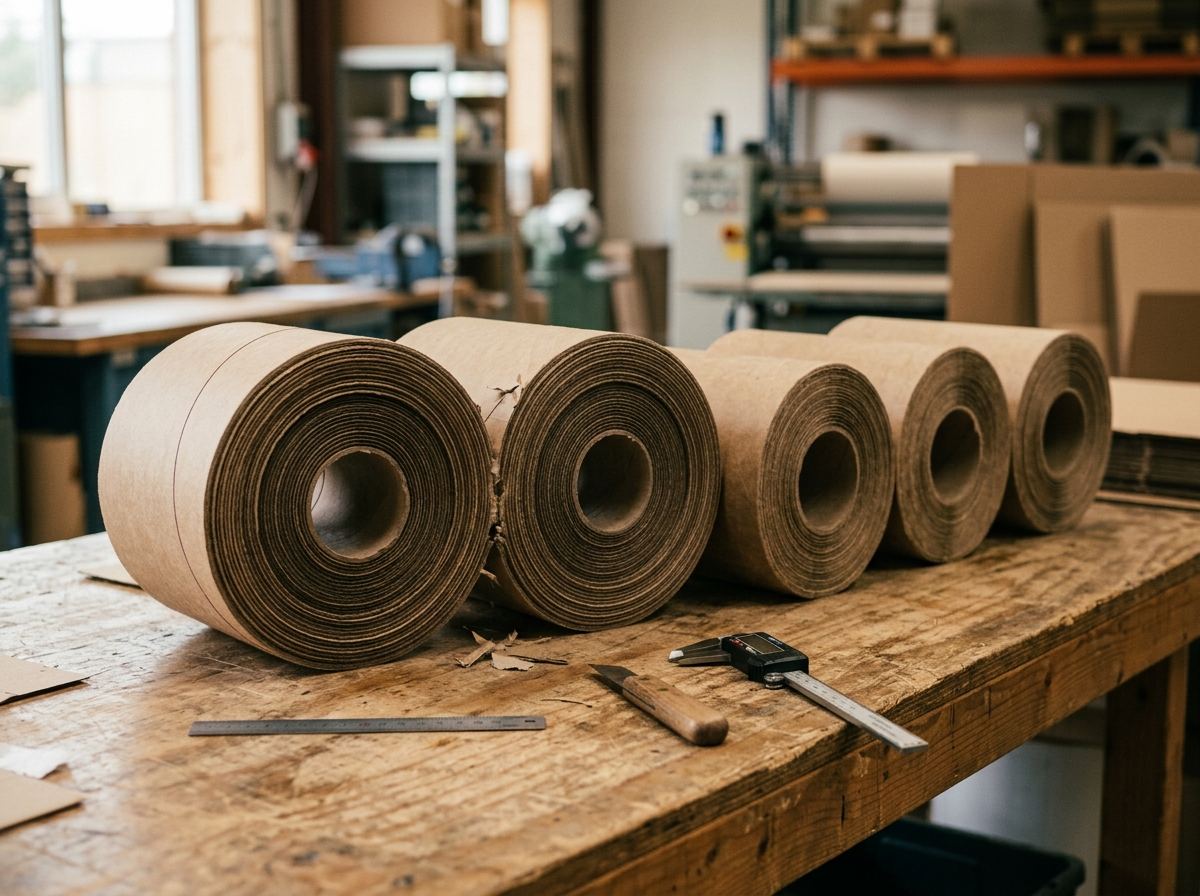
When you’re sourcing cores for a converting line, a tissue winder, or a film-packaging operation, the question isn’t philosophical — it’s practical. Do recycled paper cores hold up the same way virgin-fiber cores do? Will your line run clean? Will dimensions hold tight enough to matter? The honest answer is: it depends on how the cores are engineered, and buyers who understand the variables make better sourcing decisions.
What “Recycled” Actually Means for Core Performance
“Recycled paperboard” covers a wide range of furnish. Post-consumer fiber, post-industrial trim, old corrugated containers — these inputs differ in fiber length, moisture history, and cleanliness. A core manufacturer that sources commodity recycled board and one that specifies consistent, graded recycled paperboard stock are not doing the same thing, even if both print “100% recycled” on the label.
NHPT’s paperboard is 100% recycled, sourced from OCC (old corrugated containers) — a consistent, well-characterized furnish — and the plant recycles 100% of its production waste. The core properties buyers care most about — radial crush strength, dimensional consistency, and surface quality — all trace back to two things: the quality of the recycled paperboard used and the precision of the spiral-winding process. Fiber source matters. Adhesive system matters. Winding tension and angle matter. None of those are unique to virgin fiber.
Strength: The Honest Engineering Picture
Virgin kraft fiber is longer and stronger on a per-fiber basis than most recycled fiber. That’s a real difference and there’s no point pretending otherwise. What it does not mean is that recycled cores are structurally inferior in use — because core wall design compensates for fiber differences.
Wall thickness and ply count are the primary levers a core engineer uses to hit a target strength spec. A recycled-paperboard core engineered to a given crush-strength requirement — with appropriate wall thickness and adhesive selection — can meet that requirement just as reliably as a virgin-fiber core engineered to the same spec. The key word is “engineered.” An off-the-shelf commodity core is not engineered; a custom-specified core is.
NHPT manufactures spiral-wound cores with wall thicknesses from .030″ to .500″ across inside diameters from 1″ to 8″ and lengths from .25″ to 300″. That range exists precisely because different applications demand different strength profiles. A thin-wall core that works fine supporting lightweight film roll stock is not the same product as a heavy-wall core designed for a paper-mill winder. Both can be made from recycled paperboard when specified correctly.
Understanding what drives crush values — and what to ask your supplier for — is covered in depth in our guide to paper core crush strength.
Dimensional Consistency and Surface Quality
This is where buyers sometimes have legitimate concerns about recycled cores, and the concern is reasonable: recycled furnish can carry more variability than a controlled virgin-kraft supply if a manufacturer isn’t managing it carefully.
Dimensional tolerance — inside diameter, wall thickness, squareness of cut ends — is a function of process control, not fiber origin. A well-run spiral winder with consistent tension, calibrated mandrels, and disciplined raw-material specifications holds tight tolerances regardless of whether the board is recycled or virgin. The question to ask your supplier isn’t “is it recycled?” but “what are your dimensional specifications and how do you verify them?”
Surface quality on the ID (the bore surface that contacts your shaft or chuck) and the OD (the surface that contacts your wound material) is similarly a process question. Surface finish and smoothness depend on the outer ply selection and winding technique, not inherently on recycled content.
For applications with particularly demanding surface or dimensional requirements — precision label cores, for example, or cores for coated fabrics where core-surface contact marks can transfer — discuss the spec directly with your supplier and ask for samples before committing to a production run.
What Procurement and Sustainability Teams Both Need to Know
There’s an emerging dynamic in B2B procurement where the sustainability contact and the operations engineer are evaluating the same purchase from different angles. The sustainability team wants recycled content and end-of-life recyclability. The plant engineer wants dimensional consistency and reliable crush strength. These goals are not in conflict — but they do require a supplier who can speak to both.
Recycled paper cores made from high-quality recycled paperboard, custom-engineered to your dimensional and strength requirements, can satisfy both sides of that conversation. What they can’t do is substitute for a proper spec conversation. Generic “stock” cores — recycled or virgin — are a gamble. Custom-specified cores, sampled and qualified before you run production, are not.
Why NHPT for Recycled Paper Cores in New England
New Hampshire Paper Tube manufactures spiral-wound paper tubes and cores in Raymond, NH from 100% recycled OCC paperboard — and recycles 100% of the production waste generated in the plant. Plain uncoated kraft cores are widely recyclable at end of life, though acceptance depends on local programs and tube configuration — printed, coated, or capped tubes may not be accepted everywhere. We custom-engineer to your spec across 1″–8″ ID, .030″–.500″ wall, and .25″–300″ length. $1,000 minimum order. Stock cores ship same day with 24-hour delivery across New England; custom orders are typically ready in about 5–7 business days, with emergency expedite available for a small fee. Short freight lanes throughout New England mean 1–2 day delivery, and New Hampshire’s sales-tax-free status keeps your landed cost clean. Request a quote or call 603-693-6136.
Related reading: “Paper vs. Plastic Cores: Performance and Sustainability” · “What ‘100% Recycled’ Really Means for Paper Tubes.”