What Actually Determines Paper Tube Strength
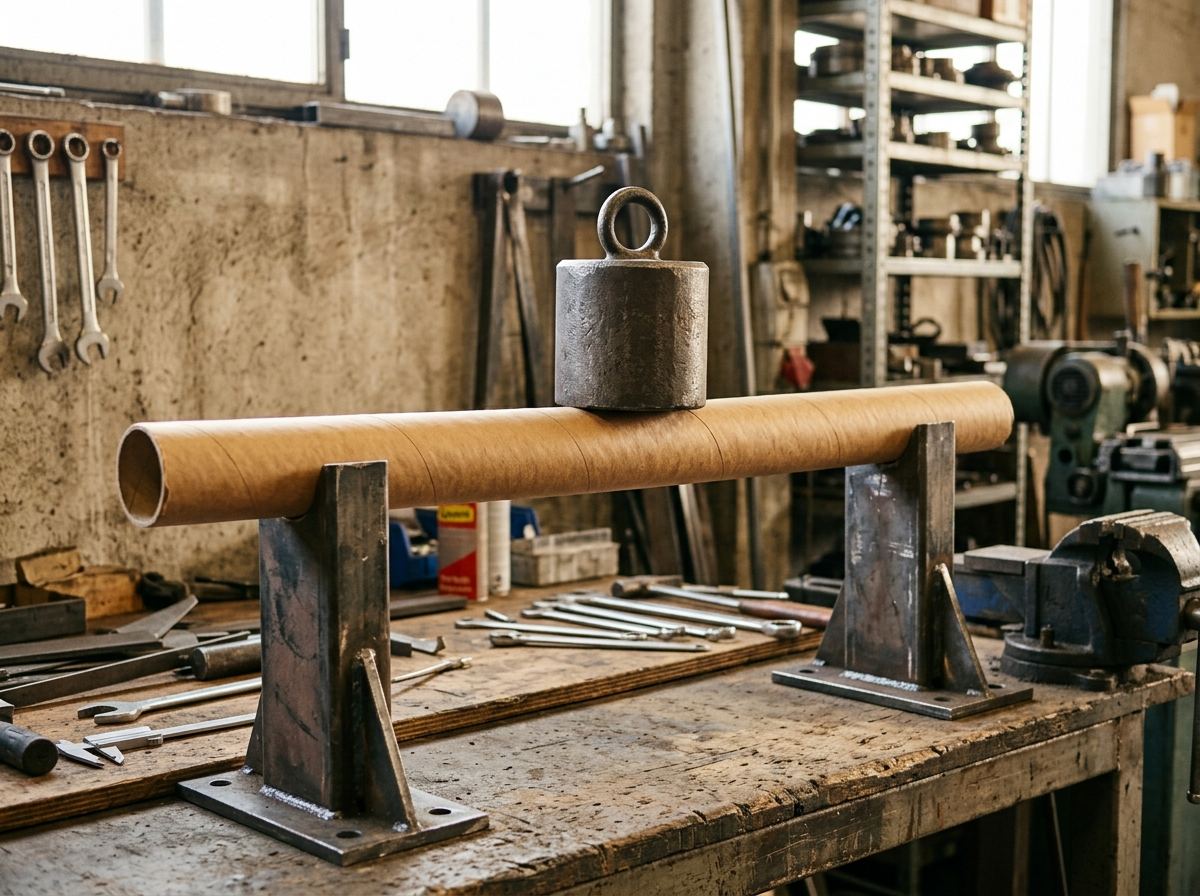
When a roll of film, foil, or nonwoven unwinds on a high-speed converting line, the core is absorbing every pound of mandrel pressure, every g-force of acceleration, and every vibration in the system. If the core collapses — or even deflects slightly — the entire roll is scrap. Understanding paper tube strength before you spec a core is not an academic exercise; it directly affects yield, waste, and machine uptime.
The engineering that goes into a spiral-wound core is more nuanced than most buyers realize. Strength is not a single number stamped on a data sheet. It is the product of at least six interacting variables, and getting any one of them wrong can put you back to square one.
Wall Thickness and Paperboard Grade: The Two Biggest Levers
If you change only one variable, change these. Wall thickness is the most direct determinant of radial crush resistance. A thicker wall distributes compressive load across more material cross-section, which raises the force required to deform the tube. Our core ID, OD, and wall thickness chart shows how inside diameter, outside diameter, and wall relate to each other — worth bookmarking before you finalize a spec.
NHPT builds walls from .030″ to .500″, depending on the crush requirement. Thin-wall cores (.030″–.060″) work fine for light-duty tape and label applications where mandrel fit and concentricity matter more than radial load. Heavy-wall cores (.200″ and up) are the territory of steel-mill rewinding, large-diameter film cores, and any application where the core sits under significant static or dynamic load.
Paperboard grade is equally important and often underspecified. Higher-density paperboard has a tighter fiber network, which improves both flat-crush resistance and stiffness. Cores wound from premium-grade stock outperform nominally identical cores wound from lower-density board — even at the same wall thickness. When comparing quotes from multiple suppliers, confirm that wall thickness and board grade are both defined, not just one of them. The right combination for your application is determined through the spec and quoting process.
Spiral Angle and Winding Geometry
Spiral-wound construction is inherently stronger than convolute (parallel-wound) construction for most compressive applications, because the helical ply orientation distributes stress more evenly around the circumference. Within spiral winding, the angle of the helix affects how load transfers through the wall.
Tighter helix angles tend to improve axial strength (resistance to end-load compression), while shallower angles can improve radial stiffness. Manufacturers tune this during winding based on the geometry of the mandrel and the number of plies. It is not a variable buyers typically control directly, but it explains why two cores with identical wall thickness and board grade can still test differently — the winding parameters were different.
Adhesive Quality and Ply Bond Strength
The paperboard plies in a spiral-wound core are held together with adhesive applied between each layer during winding. If the adhesive is under-applied, improperly cured, or incompatible with the board surface, the plies can delaminate under load. Delamination is one of the most common failure modes in cores that looked structurally fine on the shelf but failed in service.
Good adhesive coverage, consistent application pressure, and proper cure time are production-floor disciplines that do not show up in a spec sheet. This is one of the reasons it matters who is actually winding your cores — process control determines bond quality as much as material selection does.
ID-to-Wall Ratio: Geometry Matters
A thin wall on a large-diameter core is structurally very different from the same wall on a small-diameter core. As inside diameter increases relative to wall thickness, the structure becomes progressively more susceptible to ovalization and collapse under radial load. This is the same principle that governs thin-walled pressure vessels.
For practical purposes: if you are moving from a 3″ ID core to a 6″ ID core and keeping the same wall thickness, the core will not perform the same under equivalent load. Upsize the wall to compensate for the larger diameter. For a detailed look at how paper core crush strength is measured and specified, see our dedicated guide on the topic.
Moisture and End-Use Environment
Paperboard is hygroscopic — it absorbs moisture from the air, and absorbed moisture plasticizes the fiber network, reducing stiffness and crush strength. A core that meets spec when tested dry may perform meaningfully worse in a humid converting environment, a cold-storage facility, or during summer shipping.
If your application involves humidity exposure, specify it. The wall thickness, board grade, or adhesive selection may need to be adjusted to maintain performance under wet conditions. Some applications also benefit from barrier treatments, though this is application-specific and worth discussing directly with your manufacturer.
Partner with a Manufacturer Who Engineers to Spec
At NH Paper Tube in Raymond, New Hampshire, every core we make is spiral-wound from 100% recycled OCC paperboard and engineered to a specific crush requirement — not a catalog default. We run inside diameters from 1″ to 8″, walls from .030″ to .500″, and lengths from .25″ to 300″, with precision-cut ends and clean square cuts throughout. Custom mandrel sizes are available outside that ID range. Our team carries 50+ years of combined industry experience. $1,000 minimum order. Stock cores ship same day with 24-hour delivery across New England; custom orders are ready in about 5–7 business days, with emergency expedite available for a small fee. We serve New England customers — NH, MA, CT, ME, VT, RI — on 1–2 day freight lanes with no sales tax. Request a quote or call 603-693-6136.
Related reading: Paper Core Crush Strength: How to Spec It (and Why Cores Fail) · Core ID, OD, and Wall Thickness Explained.